
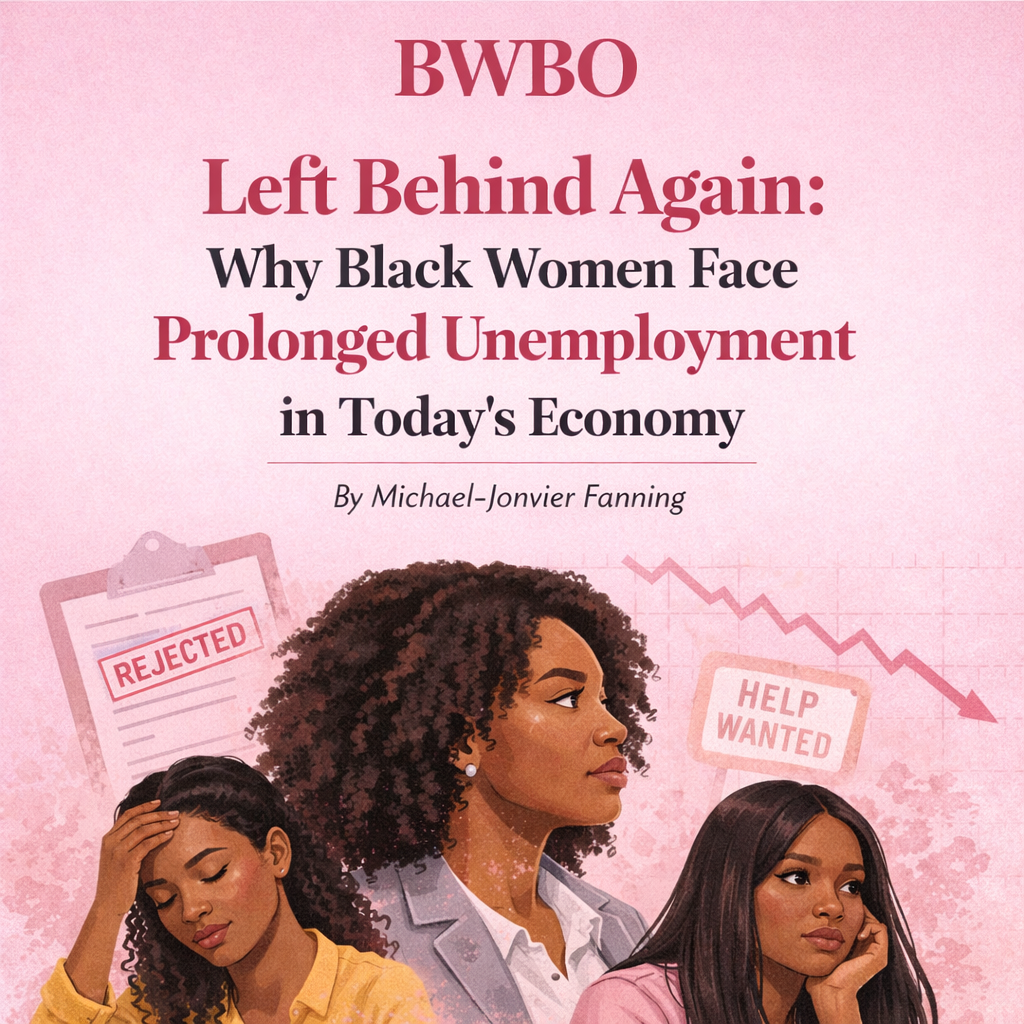
Left Behind Again: Why Black Women Face Prolonged Unemployment in Today’s Economy
In today’s economy, a troubling pattern continues to emerge—one that reflects not just economic shifts, but deeply rooted structural inequities. Black women are experiencing disproportionately high and prolonged unemployment rates compared to other demographic groups. Recent labor data shows that unemployment for Black women has hovered between approximately 6.5% and 7.7% in recent reporting periods, significantly higher than the national average for women overall, which remains closer to 4%. While the broader economy is often described as stable or recovering, this stability has not translated equally across all populations. For Black women, the recovery has been slower, more fragile, and in many cases, nonexistent.