
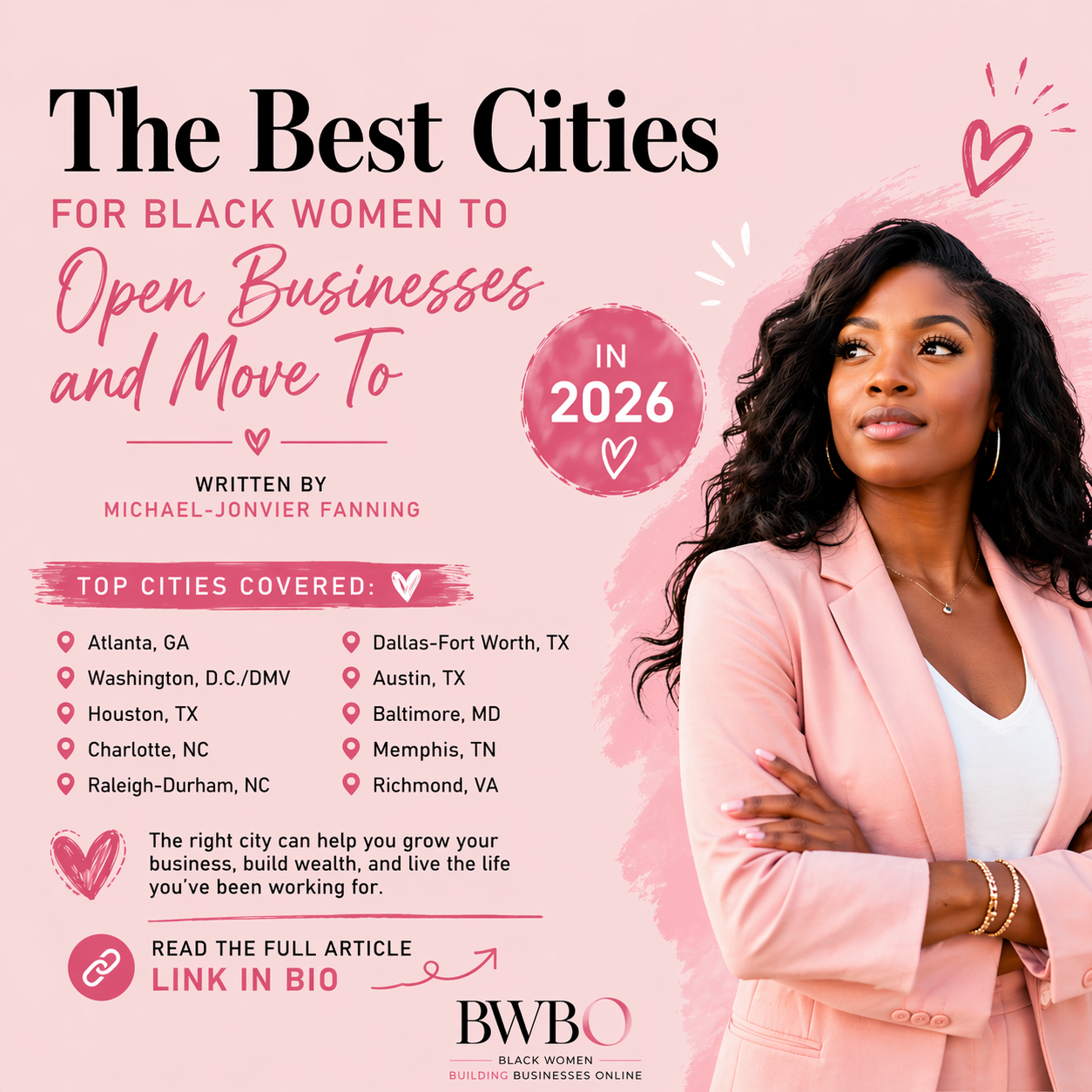
The Best Cities for Black Women to Open Businesses and Move to in 2026
Black women are not waiting for permission in 2026. They are building brands, launching service-based companies, opening storefronts, creating wellness spaces, becoming consultants, entering tech, buying property, and turning side hustles into real businesses. Recent data from Wells Fargo shows why this matters: between 2024 and 2025, Black women-owned employer businesses grew by 13%, with revenue rising nearly 6%; Black women-owned non-employer businesses also grew by 13%, with revenue rising 8%.
But where a Black woman chooses to build can matter almost as much as what she builds. The best city is not just the one with the trendiest skyline or the biggest “Black excellence” reputation. It is the city where she can find customers, community, capital, talent, affordability, safety, professional networks, and room to grow without being priced out before the business even breathes.

When Pregnancy Meets Ambition
Ambitious women are planners. They map out promotions, calculate investment timelines, set five-year goals, and visualize the version of themselves they are becoming. They strategize. They execute. They build.
Then sometimes life introduces a variable that cannot be placed neatly into a spreadsheet.
Pregnancy.

When “Girl Code” Becomes Office Politics
In friendships, “girl code” can feel sacred. It’s the unspoken agreement to protect one another, keep confidences, show loyalty, and stand united. In social settings, that kind of solidarity can be empowering. But in the workplace, especially in professional environments that demand accountability and transparency, “girl code” can quietly create dysfunction, resentment, and even legal risk.
Let’s talk about how.
1. Loyalty Over Professionalism
One of the biggest pillars of girl code is loyalty. You don’t snitch. You don’t embarrass your friend. You don’t side against her publicly. But in an office environment, loyalty to a colleague should never outweigh loyalty to ethics, company policy, or clients.
When employees cover for each other’s missed deadlines, inappropriate behavior, attendance issues, or performance problems, it doesn’t create safety — it creates liability. Managers lose clarity. Teams lose efficiency. And eventually, the truth surfaces in ways that are more damaging than if the issue had been addressed early and professionally.
Protecting a friend at work may feel supportive in the moment, but it can compromise the integrity of the entire team.

Why Office Romances End Badly
Office romances are more common than people admit. Adults spend a significant portion of their lives at work, building bonds through shared stress, ambition, and long hours. Attraction in that environment is natural. Familiarity grows quickly when you collaborate closely, solve problems together, and celebrate professional wins side by side. For some, workplace relationships turn into long-term partnerships. But for many others, they turn into professional disasters.
The issue isn’t love. The issue is risk.

Claudette Colvin Dies at 84…
Nine months before Rosa Parks’ historic stand, Claudette Colvin was just 15 years old when she refused to give up her seat on a segregated Montgomery, Alabama bus on March 2, 1955. Her act of resistance—brave, instinctive, and deeply rooted in justice—challenged the violent logic of Jim Crow at a time when doing so placed her life at risk